
You've already opened the app, watched a few videos, repeated the same phrases. Yet when someone speaks to you in Italian, you find yourself reaching for English. Learning Italian for free online is possible for the basics, and this guide shows you which resources to use and where they stop. It isn't meant for those looking for a shortcut: it's meant for those who want a concrete starting point.
In short
- Free resources are enough for vocabulary, basic grammar and listening, but they rarely offer conversation with correction.
- A plan of twenty minutes a day, repeated regularly, is more effective than long, sporadic sessions.
- A flexible individual lesson makes sense when you get stuck in conversation or lack personalised guidance.
Learning Italian for free: what you can really do without spending
Yes, you can learn the basics of Italian for free, but free resources have a precise limit: almost none of them let you speak with someone who corrects you.
Imagine you downloaded an app two weeks ago and stopped after the fourth lesson. It's not your fault: the app makes you practise, but it doesn't answer you. To go deeper: 7 tips for learning online.
- Apps with short exercises: useful for vocabulary and daily review, not much for conversation.
- Downloadable materials from institutes and universities: useful for basic grammar, though you should check them since they change over time.
- Videos and podcasts in Italian: useful for training your ear, choosing the right level.
- Language exchanges: free, but they depend on who you meet and don't always have a structure.
Which free resources exist and what they're for
Free resources fall into four categories, and each serves a different purpose. Choosing just one usually isn't enough.
Before signing up for a free service, check the terms: offers change over time and some become paid after a trial.
Free materials from institutes and universities
Many universities and institutes publish downloadable basic courses. They're useful for understanding the structure of grammar. Always check that the material is up to date before studying it.
Apps with daily exercises
Apps ask for just a few minutes a day and help you remember vocabulary. They work well for consistency, but rarely get you used to building your own sentences.
Videos and podcasts in the language
Listening to spoken Italian gets you used to the real rhythm of the language. Choose content slightly above your level: if you understand nothing, you get discouraged.
Language exchanges
Meeting a native speaker who wants to learn your language is free and practical. The risk is that sessions stay vague and that you end up speaking more English than Italian.
Comparison: free resources, paid platforms and individual lessons
To choose, price matters less than what you really need: reading, listening or speaking. The table summarises the main differences.
Three questions help you decide: do you need to speak? How much time do you have each week? Do you have a specific goal such as a trip or a home on Elba?
Immediate correction matters a lot. A teacher points out a mistake while you're speaking, and so understanding turns into practice more quickly. To go deeper: personalised lessons at your own pace. To go deeper: preparing for a trip to Italy.
- Criterion 1: if you just want to understand, free resources are enough; if you want to speak, you need someone who responds.
- Criterion 2: with 15-20 minutes a day you can build a foundation; with less time, choose short, regular lessons.
- Criterion 3: with a specific goal, such as a holiday, a targeted lesson speeds up results.
| Aspect | Free resources | Paid platforms | Individual lessons |
|---|---|---|---|
| Cost | None | Variable, often monthly | Per lesson hour |
| Conversation | Poor or absent | Limited | Central to the course |
| Error correction | Absent | Automatic or limited | Immediate from a teacher |
| Personalisation | Low | Medium | High, based on goals and pace |
Learning with little time: a free 20-minute-a-day plan
You have ten minutes between one thing and the next and you want them to really count. A simple plan, repeated every day, beats weekend marathons: five short sessions a week, with different activities, are enough to start feeling the language.
Each session lasts 15 to 20 minutes and requires no paid material. Alternate a short listening exercise, word review and a sentence to say out loud, even alone in the kitchen.
Take a sentence about your next trip, for example «Domani vado a Procchio» («Tomorrow I'm going to Procchio»). Repeat it in the present, then tell it in the past with «Ieri sono andato a...». Change only the place and notice what changes in the preposition.
This plan isn't for those looking for results in a week or for those who want to learn grammar by heart alone. If you truly have no time, start with two sessions and increase them once the routine holds.
- Monday: listen to a two-minute video and repeat the phrases you understand.
- Tuesday: write five new words linked to your day and use them in a sentence.
- Wednesday: say your trip sentence out loud, in the present and in the past.
- Thursday: reread the week's sentences and add one you hadn't said yet.
- Friday: speak aloud, in three sentences, about what you did today, without translating from English.
When free resources are no longer enough
Free resources work well for understanding and reviewing, but they don't always get you speaking. There are precise moments when you realise you need more targeted help.
You don't need to wait until you've been stuck for months. If you recognise even one of these signs, an individual lesson can shorten the road considerably.
An individual lesson doesn't replace daily study, but it guides it. Angela corrects the mistakes you keep repeating, chooses the vocabulary you need and gets you talking about your own topics.
- You get stuck even when you need to say simple things, like ordering a coffee or asking for a time.
- You repeat the same mistakes without noticing, for example with verbs of motion or prepositions.
- You have a concrete deadline, such as a stay, a job interview or daily life in a specific place.
- You have no one to practise conversation with and apps never correct you.
Flexible lessons: how they work online and in person
Italiano con Angela's individual online lessons take place by video with flexible hours, suited to those who live far from Italy or have a busy day. All you need is a good internet connection and the device you usually use.
Angela is a native-speaking teacher with a strong connection to the island of Elba. Each lesson is built around your interests, your level and the goals you have, not on a standard course that's the same for everyone.
If you're on the island you can choose in-person lessons, at a table or at your home. The hourly rate published on the site is 50 euros for online lessons, to be checked on the updated page. To go deeper: online Italian lessons. To go deeper: beginners' course on Elba.
Individual online lessons
They suit those who want to build a tailor-made course from home, with times that change from week to week. Especially useful for those preparing a trip or keeping the language alive after a holiday.
The limit is the connection: an unstable line interrupts the conversation. Check it before the first lesson.
In-person lessons on Elba
For those already on the island, lessons at a table or at home let you use Italian straight away in real places. The limit is physical distance, so it's best to book in advance.
For whom this choice isn't suitable
Free resources are enough if your goal is to review basic vocabulary and grammar. You can use apps, videos and dictionaries at no cost, and keep in training with a few dozen minutes a day.
A weekly lesson can instead be an unjustified expense if you don't intend to speak regularly. If conversation doesn't fit into your week, a teacher risks becoming a missed appointment.
No result is guaranteed. The pace of progress depends on consistency and the level you start from, and no resource, free or paid, can promise a precise date.
The teacher
Unsure which path is right for you? Angela answers personally.
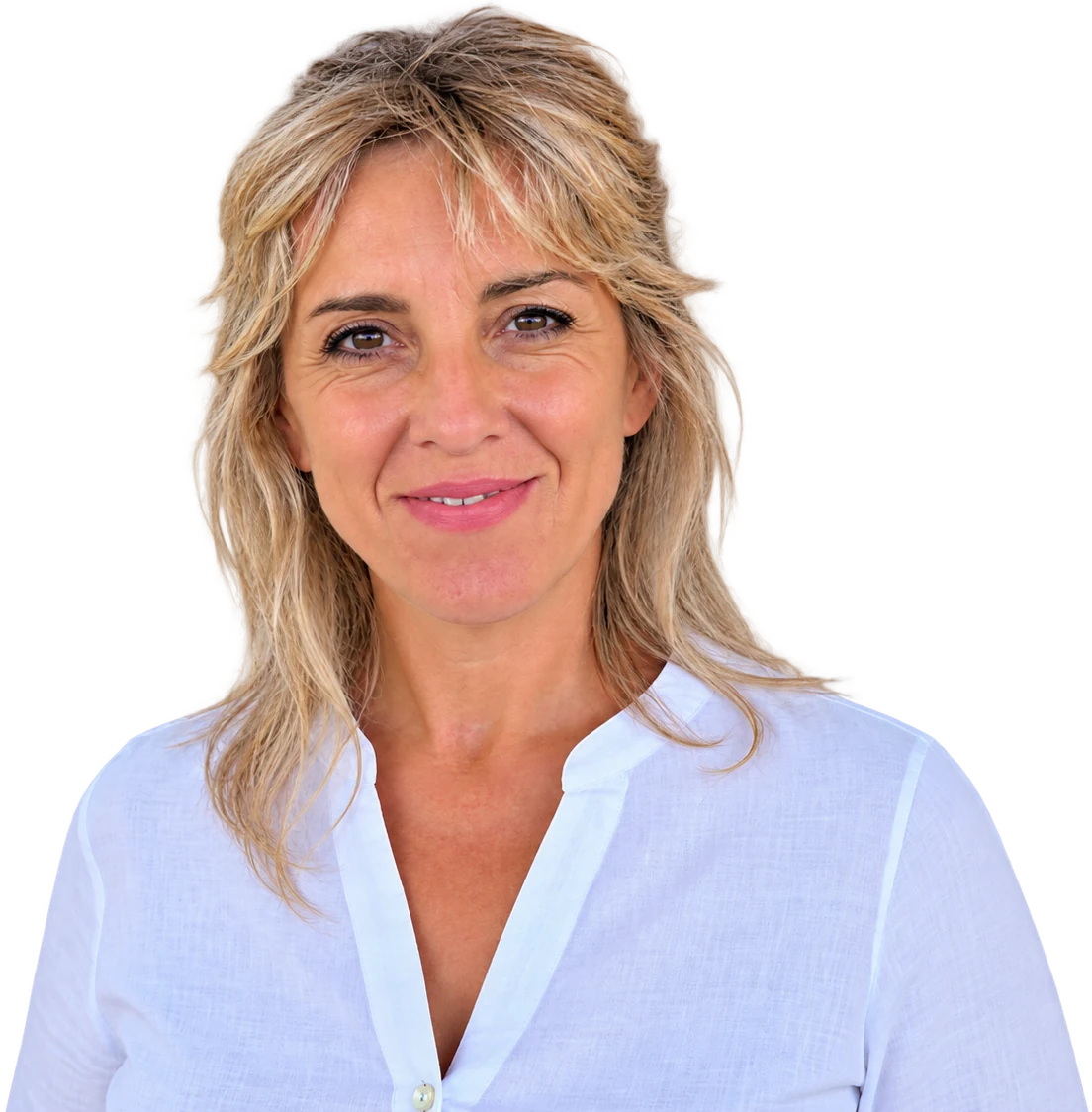
Angela Provenzali
Native Italian teacher on the Isle of Elba
Born on Elba, she teaches Italian to foreigners with tailor-made lessons: walking, at a table, at home and online.
Frequently asked questions
Can you learn Italian with free resources only?
Yes, for the basics of vocabulary, grammar and listening, free resources are sufficient. The limit comes with conversation: almost no app corrects you while you speak. If your goal is to speak with confidence, it's worth combining independent study with some guided conversation.
How long does it take to start speaking a bit of Italian?
It depends on your starting point, your goal and your consistency, and no duration is guaranteed. A plan of short, regular sessions is more effective than long, rare ones. If you're just starting, try it for a few weeks and see whether you can answer simple questions.
Are online lessons really worth the cost?
They're worth it when you need immediate correction, conversation and a tailor-made path. Italiano con Angela's individual online lessons take place by video with flexible hours. For those studying alone and feeling stuck, a targeted session can speed up the process considerably.
Do you need an advanced level to book a lesson?
No, lessons are designed for all levels, from absolute beginners to advanced students. Angela starts from where you are, with goals and pace you choose together. You don't need to know much already to begin: the lesson itself helps to understand your starting point.
Free resources give you materials, vocabulary and listening, and for many people they're enough to get started. When, however, you lack conversation with someone who corrects you, a short and flexible lesson can make the difference. You can start today with the twenty-minute-a-week plan described here, and decide later whether you need personal help.
Book a trial with Angela to discover your level and receive a first personalised plan for online lessons.
Sources: https://italianoconangela.com/blog · https://italianoconangela.com/domande-frequenti