
You're at the market stall in Procchio. The lady asks how much that bunch of basil costs. You smile, nod and answer in English. Again. You've studied the grammar, you know «vorrei» exists, but in that moment the sentence won't come out. That's why you're looking for a lesson on the move: an hour where you really speak. Choosing the trail matters. With three criteria (pace, time, interests) you find the route right for you.
In short
- Choosing the right trail for an outdoor Italian lesson takes three concrete criteria: how much you want to walk, how much time you have and what about Elba interests you.
- You don't need an advanced level: the walking lesson adapts even to beginners, starting from trail vocabulary and short sentences to find your way.
- If you want to work at length on written texts or grammar, the table lesson is the right alternative; and if it rains, the walking lesson changes shape instead of getting lost.
The route first, then the words: three questions to ask yourself
Think of the last time you spoke Italian for more than two minutes. Where were you? With whom? Probably not in a classroom. To choose the right trail, answer three questions: how much do you want to walk, how much time do you have to talk, what interests you most. A slow pace and breaks take away the pressure of being quizzed: you speak the way you would with a neighbour. For more: why walking works.
- How much you want to walk: an easy hour by the sea or a longer route, chosen with Angela according to your pace.
- How much time you have for conversation: two kilometres of real talk are worth more than eight run at speed.
- What interests you: the sea, the hill villages or local history, such as the iron mining trails.
- Your level shapes the choice: Angela builds the itinerary even if you're at your first sentence in Italian.
Three types of route, a table to choose from
Who writes: Angela, native Italian teacher born on the Isle of Elba, with twenty years of experience teaching Italian to foreigners. The routes are not catalogue excursions: Angela agrees the itinerary on your interests, your pace and your language level[1]. In the table you'll find the three types of route that suit a lesson best and the choice that follows.
Worked example: you reach the fork on the stretch between Procchio and the scrubland. Angela asks: «Giriamo a destra o proseguiamo?» (Shall we turn right or carry on?). You answer: «Proseguiamo, il paese è più in alto» (Let's carry on, the village is higher up). Then you add: «Io preferisco la strada in ombra» (I prefer the shaded road). In ten seconds you've used a conditional, a preposition and a personal opinion, without opening a book. And if the weather changes, the lesson changes shape instead of getting lost: here are the alternatives.
- Procchio area: start near the sea-view apartments, ground suited to a conversational pace; Angela points out the exact stretch and the right footwear when you agree the itinerary.
- Campo all'Aia and surroundings: to walk a bit further without losing the thread of the dialogue, with stops to observe and describe.
- Hill villages: more climbs, so more scenic pauses; every stop becomes the chance to talk about what you see.
| Type of route | Pace and ground | Right for you if… |
|---|---|---|
| Procchio area | Slow, mostly flat stretches near the sea | It's your first walking lesson or you want a short walk after the beach |
| Campo all'Aia and surroundings | Moderate, distance at conversational pace | You want to walk further without losing the thread of the conversation |
| Hill villages | Lively, climbs with frequent scenic pauses | You're comfortable going uphill and love talking about villages and local history |
Three routes that work well for a lesson
For a walking lesson it's best to choose a route with a clear starting point, ground suited to a conversational pace and planned pauses. Here are three options Angela can propose, to weigh against how much you want to walk and how much time you have. For more: who Angela is.
Procchio area
The starting point is near your accommodation, with mostly flat ground and a few slightly uphill stretches. It suits someone who wants a short walk and to talk without strain. Avoid it in the hottest hours, when shaded breaks become necessary.
Campo all'Aia and surroundings
The route alternates dirt track and tarmac, with a distance to cover at conversational pace. It works well for those who want to walk a bit further without losing the thread of the dialogue. Ask in advance which stretch is planned and what footwear is needed.
Hill villages
This is the most demanding stretch, with climbs that call for frequent scenic pauses. The stops become chances to talk about what you see. Choose this route only if you feel at ease walking uphill.
Route vocabulary: uphill, downhill, scrubland, dry-stone wall
When the ground changes, so does the way you describe it. The right words let you point out an uphill stretch, signal a pause or explain what you're looking at, even if you're in the first lessons.
- Uphill and downhill: going uphill you say «adesso si sale» (now we go up), downhill «adesso si scende» (now we go down). These are phrases you'd also use with a friend.
- Dirt track and dry-stone wall: «il sentiero è di terra battuta» (the path is packed earth) and «il muretto a secco è fatto di pietre sovrapposte senza malta» (the dry-stone wall is made of stones stacked without mortar).
- Mediterranean scrub and viewpoint: «qui c'è la macchia mediterranea, con cisti e lentisco» (here there's Mediterranean scrub, with cistus and mastic) and «fermiamoci al punto panoramico per guardare il mare» (let's stop at the viewpoint to look at the sea).
- Example at a fork: ask «giriamo a destra o proseguiamo?» and answer «proseguiamo, il paese è più in alto».
| Situation | Italian phrase | When to use it |
|---|---|---|
| Uphill | Adesso si sale | When the ground starts to climb |
| Dirt track | Il sentiero è di terra battuta | To describe the ground underfoot |
| Fork | Giriamo a destra o proseguiamo? | When you have to decide the direction |
Questions to ask before booking, with answers
Before booking you ask yourself four precise questions. Here are the direct answers, one by one, so you already know what to write to Angela and what to expect from the lesson.
- What ground will I cover? Ask in advance: Angela chooses the route according to your pace and language level, and you can tell her straight away if you prefer a flat path.
- Will I have time to talk? Yes, if you shorten the distance: two kilometres of real talk are worth more than eight run at speed. A rich conversation needs pauses.
- Will there be stops? Ask whether the route includes a shady spot or a stop near the sea: the stops give you things to talk about.
- Travelling as a couple or family: agree beforehand whether you both take part in the lesson or one of you only comes along. Agree one shared priority, not three compulsory destinations.
Getting ready without complications, and with the weather
Preparing an outdoor lesson takes little, but it has to be done in order. The agreed route decides the gear, not a generic list for a demanding hike.
- Choose comfortable shoes, bring water and clothing suited to the season, according to the route you agreed.
- Tell Angela about any physical limits, pace preferences and what makes you uneasy before setting off.
- If it rains, ask for the alternative: the table lesson in the studio or in the Procchio garden, or an online lesson, keeping the same topic.
When the walking lesson isn't for you
If your goal is to reread and correct an Italian presentation line by line, the trail won't help: you need a table. With sheets, notes and a steady chair you work better, and in an hour you sort what you've been putting off at home for weeks. The table lesson in the studio or in the Procchio garden exists for this.
Physical limits matter too. If a knee, your back or your breath won't let you walk on uneven ground, don't force it: ask for a flat itinerary or switch to the home lesson at your accommodation, seated with all the material to hand.
And if you're already back home? The online lesson keeps your Italian going between one stay and the next. The formats alternate: walking on fine days, at the table for writing, online from home. Choose whichever gets you speaking the most.
Note: the walking lesson does not replace a certified language course or a school programme. And before setting off, tell Angela about any physical limits, pace preferences and what makes you uneasy: the route adapts to you, not the other way round. For more: table Italian lessons.
How to book your walking lesson
If you're already on Elba, or will be soon, tell Angela your level, how much you want to walk and what interests you: discover the experience of Italian on the move and agree together the route, pace and the alternative in case of rain. If instead the trip is far away or you're already back, start from the [online Italian lessons](/lezionionline) to arrive prepared or keep the conversation going.
In your request write three things: your level, the type of ground and the duration that seem right to you, and whether you prefer sea, villages or scrubland. Also ask for the alternative in case of bad weather before booking: that way you know in advance what to wear and what to expect.
- State your level of Italian and what you want to be able to say in a real conversation.
- Choose the type of ground and the duration that seem right for your day.
- Ask for the alternative in case of bad weather before booking.
The teacher
Unsure which route suits you? Angela answers personally.
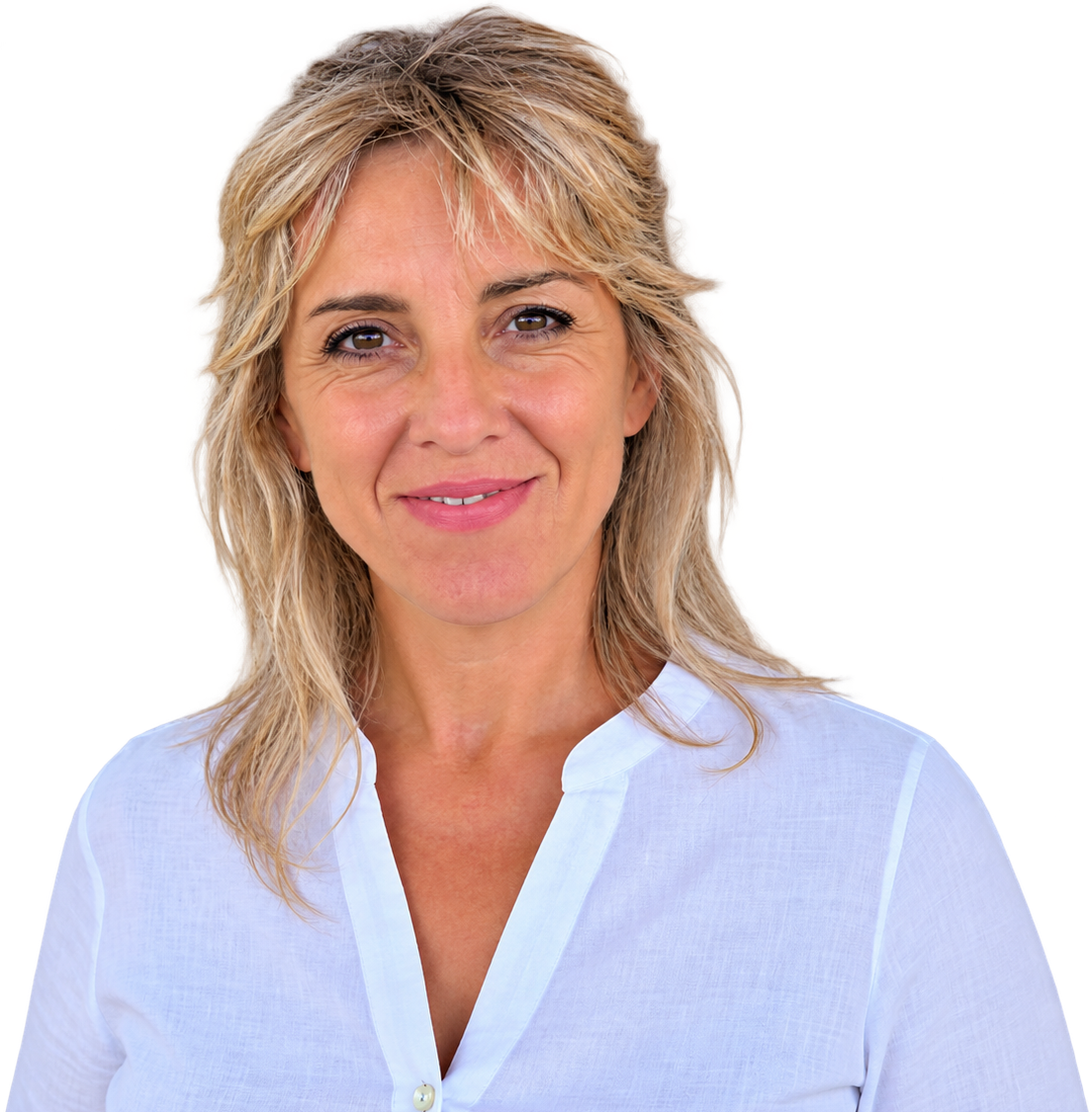
Angela Provenzali
Native Italian teacher on the Isle of Elba
Born on Elba, she teaches Italian to foreigners with tailored lessons: walking, at the table, at your accommodation and online.
Frequently asked questions
What are the easiest trails for a lesson on Elba?
For a lesson, short routes with regular ground and natural pauses are best: coastal stretches around Procchio or flat paths between nearby villages. Angela adapts them to your pace and level. If you've never walked with a language goal, start with a short stretch.
What is the best month for a walking lesson on Elba?
It depends on what you're after. Spring offers flowering scrub and mild temperatures. Autumn brings light and quiet for talking calmly. In summer, early morning or late afternoon works best. The route is agreed according to weather and conditions, not rigid calendars.
How do I know if I'm making progress in walking lessons?
You notice progress from concrete signs: you describe the landscape in your own words, you sustain a conversation longer before getting stuck, you use a conditional without reaching for the English. Angela observes these signs with you and builds the next lesson on what you still lack.
What if it rains during my stay?
The lesson isn't lost, it changes shape. It can move under a portico, become a table lesson on walking vocabulary, or a review of what you've learned. You check the weather together before going out, so you decide in advance.
Do I need an advanced level for the walking lesson?
No. As a complete beginner you start from words and short phrases linked to the route, such as giving a direction or describing the landscape. With a more solid level the conversation extends to the history of the places and local life. You decide the pace and the pauses.
Is the walking lesson suitable if I don't have much time?
Yes, if you choose a short route. An hour-long lesson with frequent pauses can be more useful than a day's hike, because it leaves room for you to speak. Tell Angela when you book: the route adapts to the time you have.
Are online lessons less effective than in-person ones?
It depends on the goal. Online you work on conversation, listening and preparing for the trip, with flexible hours. In person the conversation is more natural because you use the real context. You can alternate the two formats: walking on fine days, online when you're back.
The answer to the starting question is simple: choose the trail for your outdoor Italian lesson according to how much you want to walk, how much time you have and what interests you. Three criteria, an itinerary built around you and no programme identical for everyone. If this combination convinces you, the next step is to tell Angela your three points: together you turn an Elba trail into your first real lesson.
Tell Angela your level, the time you have and what interests you about Elba: book your walking lesson and walk your first route in Italian.
Sources
- Istat — istat.it. View the source